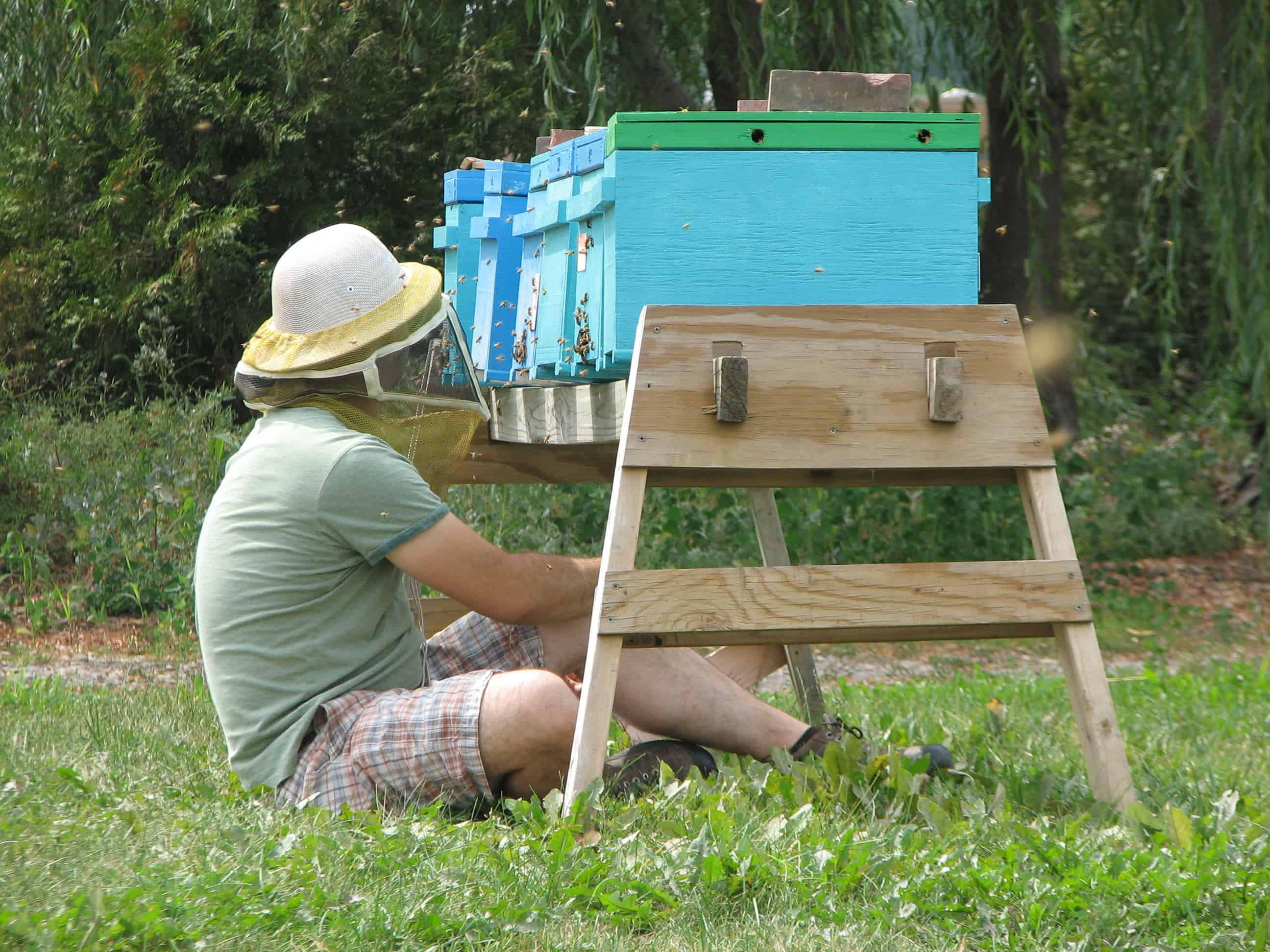
I talked a little about propolis, human health, how bees collect it here, but now I want to talk about propolis and bee health. If the bees can’t eat propolis, then why would they collect it? It is costly to bring back to the hive since it takes time and energy away from bees that could be foraging for nectar or pollen, so it must have some benefits. And it does! Mike Simone-Finstrom did his PhD work on looking at how propolis affects bee health.
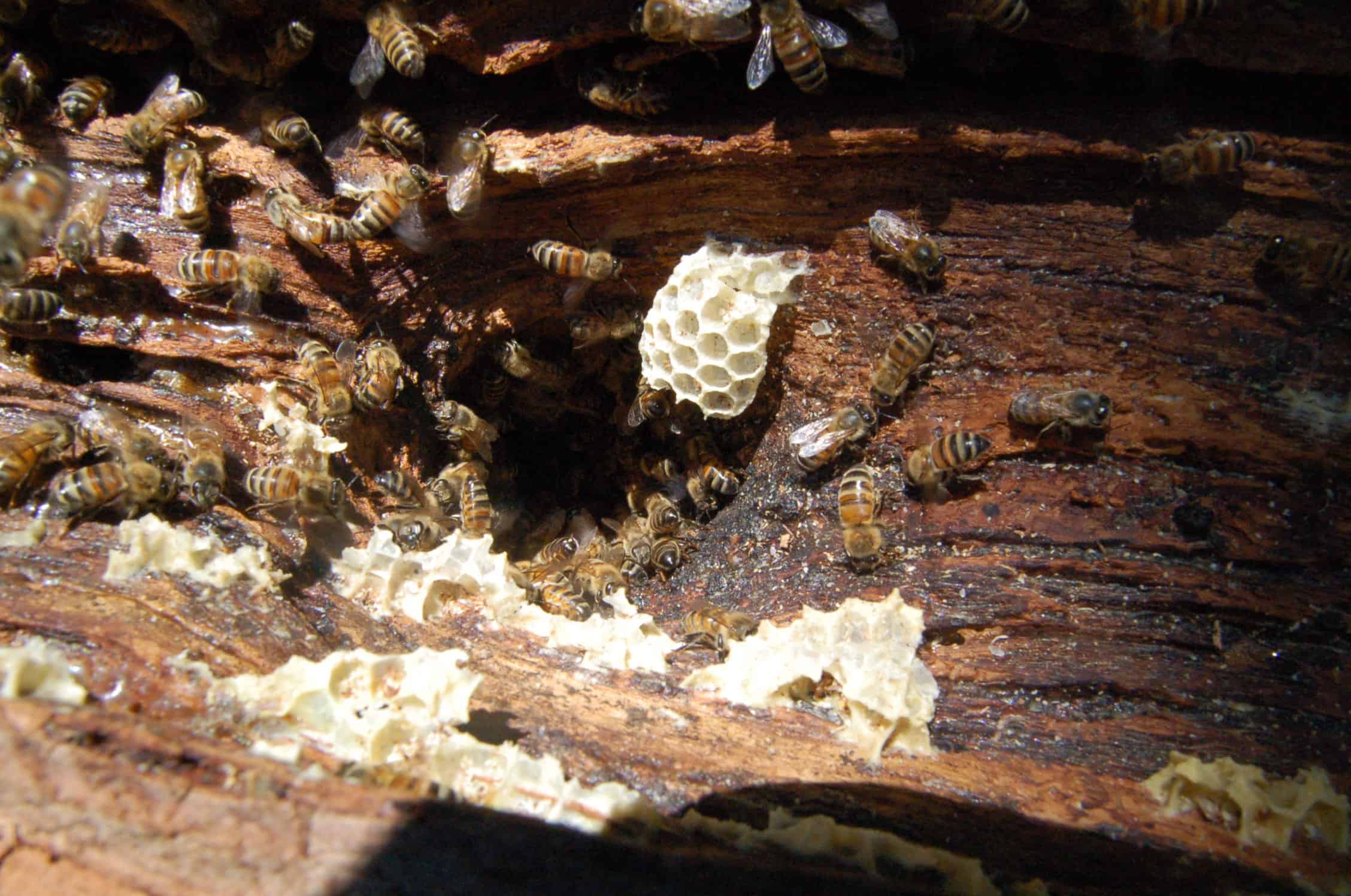
Bees living in a tree cavity coat the tree walls with what Tom Seeley dubbed a “propolis envelope.” The walls in a managed Langstroth hive are smooth, so bees really only put it in cracks like where the frame edges meet the box and between the boxes. Mike decided to paint the inside of nucleus colonies (5 frame colonies) with a propolis tincture to see if it had any effect on the bee immune system. He found that the bees in the propolis rich environment had a less active immune system, meaning that the bees could invest less in costly immune proteins because propolis acted as a microbial barrier. So, propolis does help the bees.

If you are interested in getting your bees to make their own propolis envelop in your smooth-walled hive, then rough up those smooth sides. Mike used a sander with the rough wire attachment to mechanically rough up the inside hive boxes. It isn’t exactly easy, but it is do-able. Let me know if you think up a better way to make the inside of a smooth wooden box rougher. Maybe if the bees are busy putting the propolis on the sides of the roughed-up box, then they will be less likely to but it on the frame and box edges.