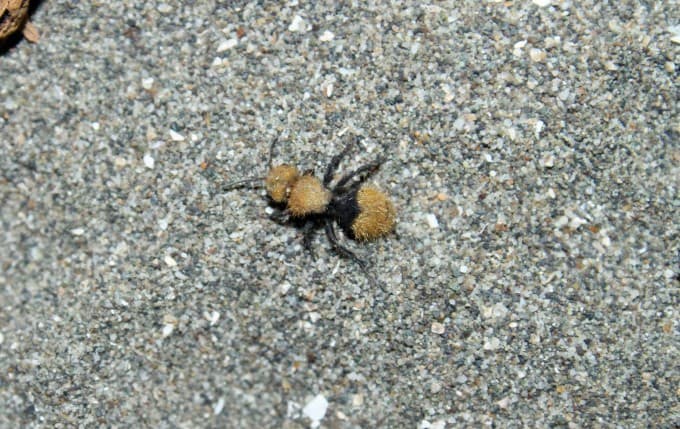
Velvet Ants (Mutillidae)

Dasymutilla sp. female (Velvet ant)

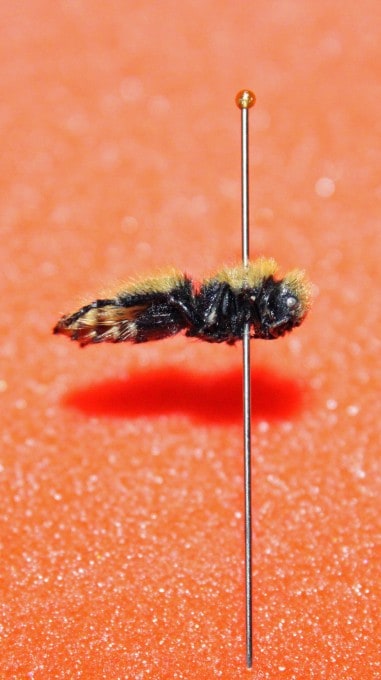
On a recent adventure into the Ishi Wilderness…(http://en.wikipedia.org/wiki/Ishi_Wilderness) I stumbled onto my second Velvet Ant (Mutillidae) in California. This one was similar to the first species I saw. There are a few images below that show the first one I collected. Mike also found a Velvet Ant that looked to be the same species. Velvet ants are so named because of their dense hair that can be gold, black, orange or a variety of other colors. I have both specimens in captivity now. One fascinating thing I found about these ants is they make squeaking noises by stridulation which means that they make sounds by rubbing together parts of their body. Other common names for these ants include Cow Killers or Solitary Ants. The sting from the Mutillids is supposed to be very painful; fortunately I have not been stung by one yet. The name Cow Killer comes from the joke that the sting is painful enough to bring down a cow. If anyone can give a species ID or a key for mutillidae please comment.
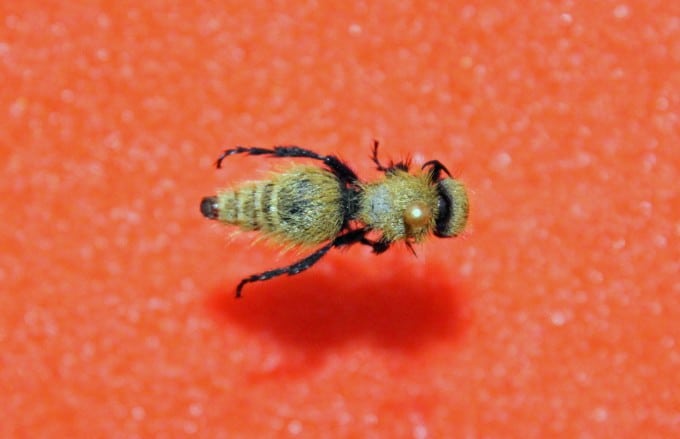
Dasymutilla sp. female(Velvet ant pinned)

Dasymutilla sp. female(Velvet ant pinned side view)

The interesting about these “Ants” is that they are not ants. Velvets ants are wingless wasps in the superfamily Vespoidea. The females are most commonly found since they are apterous (without wings), males however are winged and show great sexual dimorphism from the female. Once mated, the females will invade ground nesting insects. Insect host include solitary bees, flies, Limacodidae moths, beetles and cockroaches. The female will lay haploid and diploid eggs on the exterior of the host. The host development stops upon egg eclosion (the emergence of a larvae from an egg or an insect from a pupa case) making this a parasite that lives on the outside of its host and kills its host in the process (idiobiont ectoparasatoid). The diploid eggs are fertilized and become females the haploid eggs are unfertilized and emerge as males.
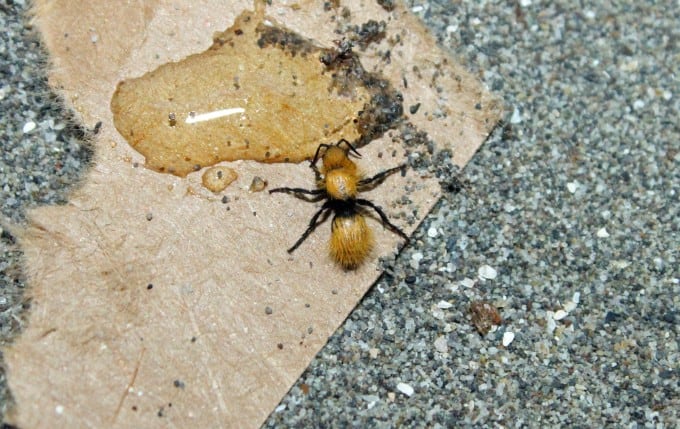
Velvet Ant feeding.

This entry was posted in Blog and tagged , , , , , , , , by Rob Snyder. Bookmark the permalink.

About Rob Snyder

I currently work out of the Butte County Cooperative Extension in Oroville, CA as a Crop Protection Agent. I received my B.S. in biology from Delaware Valley College, PA. There I attained a majority of my entomological knowledge from Dr. Chris Tipping and Dr. Robert Berthold. After graduation, I was an apiary inspector for 2 years at the Department of Agriculture in Pennsylvania. In my third year there, I still inspected some colonies but I mainly focused on The Pennsylvania Native Bee Survey (PANBS) where I pinned, labeled, entered data and identified native bees to genus species. Leo Donavall assisted me in learning the basics on positive Identifications of the native bees. Around the same time I began working on coordinating kit construction and distribution for the APHIS National Honey Bee Survey. I was also fortunate to conduct many of these surveys with fellow co-worker Mike Andree and Nathan Rice of USDA/ARS throughout California. All of these experiences have led me to where I am today, working to assist beekeepers in maintaining genetic diverse colonies resistant to parasites while reducing the use of chemical treatments in colonies. The BIP Diagnostic Lab at the University of MD is in an integral part of this process by generating reports in which we can track change and report to beekeepers vital information in a timely manner which may influence their treatment decisions.

Leave a Reply

Your email address will not be published. Required fields are marked *

You may use these HTML tags and attributes: <a href="" title=""> <abbr title=""> <acronym title=""> <b> <blockquote cite=""> <cite> <code> <del datetime=""> <em> <i> <q cite=""> <strike> <strong>